Source Battery Pack Welding Machine for EV, E-bike, and Power Tools
Compare 30 battery pack welding machine for ev and e bike options including spot welding models with single-phase or three-phase power. Review specifications like cooling methods, control types, and customization availability from verified Chinese manufacturers.
Key considerations
Products List




Comprehensive Sourcing Guide
Strategic Sourcing Guide for Battery Pack Welding Machines for EV and E-Bike Applications
The global transition toward electrified mobility has intensified the demand for high-precision manufacturing equipment, specifically battery pack welding machines designed for electric vehicles (EVs) and e-bikes. Sourcing the correct machinery is a critical operational decision that directly impacts production throughput, cell integrity, and final product safety. This guide synthesizes available market data and technical observations to assist procurement professionals in evaluating potential suppliers and selecting equipment that aligns with specific production requirements. The focus remains on evidence-based attributes, ensuring that buyers can make informed decisions without relying on unverified marketing claims.
Technical Specifications and Operational Capabilities
When evaluating battery pack welding machines, the primary differentiator lies in the specific welding technology and control mechanisms employed. The market presents a diverse array of configurations, ranging from manual to fully automatic systems. A critical observation in current listings is the prevalence of Single-Phase AC Resistance Welders, which are often categorized by their specific application in combining various battery cell formats such as 18650, 26650, 21700, and 32650. These machines are designed to handle the unique conductive properties of lithium-ion cells used in EV and e-bike packs.
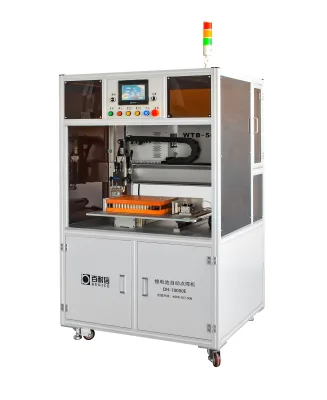
The control system is a fundamental specification to verify. Buyers may encounter machines described as "Semi-Automatic," "Automatic," or "Manual." The choice between these depends heavily on production volume and labor strategy. For high-volume e-bike assembly, automatic systems with defined Y-axis and X-axis travel capabilities are often preferred to ensure consistency. For instance, specific models in the market offer customizable travel ranges, such as Y-axis travel of 500mm and X-axis travel of 400mm, with motor drive speeds reaching up to 600mm/s. In contrast, other configurations may utilize a fixed style with single-sided conductive ways, suitable for lower volume or specialized applications.
Cooling methods also vary significantly across the supply base. Some units are engineered with air cooling, which simplifies infrastructure requirements, while others utilize water cooling to manage heat dissipation during high-intensity operations. The welding speed is another critical metric; observed specifications indicate speeds up to 1000mm/s for certain high-performance models. Furthermore, the power supply requirements must be carefully matched to the facility's electrical infrastructure. Options range from single-phase AC 220V/50Hz to three-phase AC380V50Hz inputs. The output current capacity is equally vital, with some machines offering optional short-circuit currents of 5000A, 8000A, or 10000A to accommodate different cell sizes and pack configurations.
Compliance, Certification, and Safety Standards
In the battery manufacturing sector, compliance is not merely a regulatory formality but a prerequisite for market access and operational safety. While specific certification statuses like CE or ISO9001 are frequently cited in the broader industry, buyers must verify the actual certification of the specific unit being procured rather than assuming compliance based on general market trends. The absence of explicit certification data for every listed product necessitates a rigorous verification process during the supplier evaluation phase.
Safety standards for welding equipment often relate to the electrical safety of the machine and the operational safety of the welding process. The input power specifications, such as 220V±10%/50Hz±10%, indicate the tolerance levels the machine is designed to handle. Buyers should request documentation confirming that the equipment meets local electrical safety codes in their region. Additionally, the working air source requirements, typically ranging from 0.5 to 0.6 MPa for pneumatic models, must be compatible with the factory's compressed air system.
The physical standards of the machines, often defined by their dimensions, are also part of the compliance picture regarding facility layout and safety clearances. Observed dimensions vary widely, from compact units measuring approximately 16310570cm to larger industrial frames reaching 12009002000mm. Ensuring the machine fits within the designated workspace while maintaining safe operating distances is a key consideration. Buyers should verify that the machine's design includes necessary safety interlocks and emergency stop mechanisms, even if these are not explicitly detailed in the initial product listings.
Cost Drivers and Pricing Dynamics
The pricing of battery pack welding machines is influenced by a complex interplay of factors, including automation level, power capacity, and customization options. The observed price range in the market is extensive, spanning from approximately $800 to $9,000,000. This vast disparity reflects the difference between basic manual spot welders and fully integrated, high-precision robotic welding cells.
A primary cost driver is the control system. Automatic machines with programmable logic controllers (PLCs) and advanced motion control systems command a premium over manual or semi-automatic counterparts. The power capacity is another significant factor; machines capable of delivering higher short-circuit currents, such as 10,000A, generally cost more due to the heavier-duty transformers and power supplies required. Customization is also a major cost component. Many suppliers offer customization for travel axes, welding heads, and software interfaces, which can significantly increase the base price.
The packaging and shipping logistics also contribute to the total cost of ownership. Products are typically shipped in wooden packages, wooden boxes, or strong plywood cases to protect the machinery during transit. The origin of the machine, often cited as China (Shenzhen or Xiamen, Fujian), influences shipping costs and lead times. Buyers should account for the weight of the machine, which can range from 23.5 kg for smaller units to several tons for large industrial systems, as this affects freight charges.
Typical Applications and Production Scenarios
Battery pack welding machines serve a critical role in the assembly of energy storage systems for various mobility applications. The specific configuration of the machine should align with the type of battery pack being produced. For e-bikes, which often utilize smaller form factors like 18650 or 21700 cells, machines with precise single-spot welding capabilities are essential. These applications require high repeatability to ensure the integrity of the pack without damaging the sensitive cell components.
For larger EV applications, the requirements shift towards higher power outputs and multi-spot welding capabilities. Machines with multiple welding spot numbers and higher power ratings, such as 35 kVA or 500W continuous power models, are better suited for these tasks. The ability to handle different cell combinations, such as the 18650/26650/21700/32650 battery combinations mentioned in product attributes, is a key indicator of versatility.
The style of the machine also dictates its application. Vertical machines are often preferred for stack welding in e-bike packs, while fixed-style machines may be utilized for specific assembly line stations. The conductive way, whether one-sided or otherwise, determines the accessibility of the welding point, which is crucial for complex pack geometries. Buyers should assess their specific production workflow to determine whether a single-phase or three-phase machine is more appropriate for their facility's power infrastructure.
Supplier Evaluation and Origin Verification
Evaluating suppliers requires a focus on transparency and the ability to provide verifiable product data. The origin of the machinery is a key factor in the supply chain, with many units originating from manufacturing hubs in China, specifically Shenzhen and Xiamen, Fujian. While these regions are known for their manufacturing capabilities, buyers must verify the specific factory location and production capacity of the supplier.
When assessing a supplier, buyers should look for clear documentation regarding the product model, such as YK-A10000, TOB-USW-3000W, or ACEY-5000D. These model numbers often correspond to specific technical configurations. It is essential to confirm that the supplier can provide detailed specifications for the exact model being purchased, including the standard dimensions and weight. The packing method, whether wooden package, wooden box, or plywood case, should also be confirmed to ensure safe delivery.
Buyers should avoid suppliers who make unverified claims about certifications or performance metrics. Instead, they should request test reports and compliance documentation directly from the manufacturer. The presence of customization options, such as adjustable Y-axis travel or specific voltage requirements, indicates a supplier capable of tailoring solutions to specific needs. However, buyers must ensure that these customizations are clearly defined in the contract to avoid scope creep or unexpected costs.
Quality Control and Long-Term Procurement Considerations
Implementing a robust quality control (QC) process is essential when integrating battery pack welding machines into a production line. QC should begin at the supplier level, where buyers can request sample welds or demonstration videos to verify the machine's performance. The consistency of the welds, the accuracy of the positioning, and the stability of the power output are critical metrics to monitor.
Long-term procurement considerations include the availability of spare parts and technical support. Machines with complex control systems or specialized components may require specific replacement parts that are not readily available on the open market. Buyers should inquire about the lead times for spare parts and the supplier's policy on technical training and maintenance. The cooling system, whether air or water, also requires regular maintenance to ensure optimal performance and longevity.
The adaptability of the machine to future production needs is another important factor. As battery technologies evolve, the ability to upgrade the machine's software or hardware to handle new cell formats or higher power requirements can extend the useful life of the investment. Customization options, such as the ability to adjust the motor drive speed or welding parameters, provide this flexibility. Buyers should also consider the total cost of ownership, including energy consumption, maintenance costs, and potential downtime, when making their final selection.
Conclusion
Sourcing a battery pack welding machine for EV and e-bike applications requires a meticulous approach that balances technical specifications, compliance requirements, and cost considerations. The market offers a wide range of options, from manual spot welders to fully automatic systems with customizable features. By focusing on verified product attributes, such as control types, power specifications, and origin details, buyers can make informed decisions that align with their production goals. The extensive price range and diverse configurations necessitate a thorough evaluation of each potential supplier to ensure the selected equipment meets the rigorous demands of modern battery manufacturing. Ultimately, the success of the procurement process depends on a clear understanding of the specific needs of the production line and the ability to verify the capabilities of the machinery before purchase.
FAQs
What customization options are available for battery pack welding machines?
Customization is available for specific production needs such as travel axes and welding parameters. Buyers can request adjustable Y-axis travel up to 500mm and X-axis travel up to 400mm to fit unique battery pack geometries.
Which cooling methods are used for these welding machines?
Available cooling methods include air cooling and water cooling depending on the model. Air cooling simplifies infrastructure, while water cooling manages heat dissipation during high-intensity operations for continuous production.
Can these machines handle different battery cell combinations?
Yes, specific models are designed for 18650, 26650, 21700, and 32650 battery combinations. This versatility allows the equipment to support various e-bike and EV pack assembly requirements without changing hardware.
What power supply options exist for the welding machines?
Power supply options range from single-phase AC 220V/50Hz to three-phase AC380V50Hz. Buyers must match the machine input to their facility's electrical infrastructure to ensure safe and stable operation.
How is the output current capacity defined for these units?
Output max short circuit current is available in optional ranges of 5000A, 8000A, or 10000A. This flexibility allows users to select the appropriate power level for different cell sizes and pack configurations.
What are the standard packaging requirements for shipping?
Machines are typically shipped in wooden packages, wooden boxes, or strong plywood cases. This packaging ensures the equipment is protected during transit from origins like Shenzhen or Xiamen to the buyer's location.